
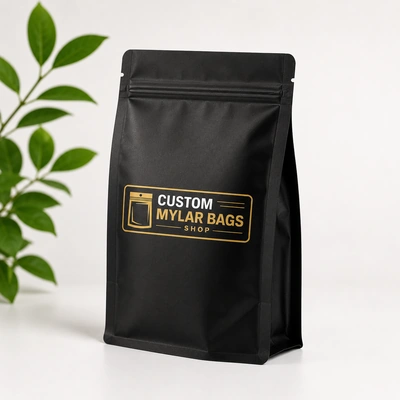
“What size mylar bag do I need?” is the question we hear most from first-time buyers — and it’s usually answered with a chart of dimensions that doesn’t actually solve the problem. The dimensions of the bag matter less than how those dimensions translate to capacity, and capacity depends on what you’re filling it with. A 6″ × 9″ bag holds a pound of coffee, half a pound of granola, or nearly two pounds of protein powder. Same bag, very different volumes.
This guide walks through how to actually pick the right size for your product, with practical reference points for common categories.
Start With Fill Weight, Not Dimensions
Before looking at any size chart, write down two numbers: how much your product weighs per unit, and approximately how dense it is. Coffee beans are bulky and light. Ground spices are dense and compact. Granola is mostly air. Protein powder is heavy for its volume. Those differences are what determine which bag dimensions work.
The shortcut: ask your manufacturer to compare the fill volume (in cubic inches) of the bag to the bulk density of your product. Or — much faster — run a test. Fill a paper bag of the dimensions you’re considering with your actual product, weigh it, and see whether it sits roughly two-thirds to three-quarters full when sealed. That’s the comfortable fill range for most resealable mylar bags. Cram it to the top and the zipper won’t close properly; leave it half empty and the bag looks like you shorted the customer.
Reference Sizes by Capacity
Below are the dimensions we see ordered most often, with the realistic capacity each holds across product types. Treat these as starting points — every bag we make is custom, so you can land anywhere in between.
| Dimensions (W × H) | Coffee Beans | Granola / Snacks | Powder / Protein | Common Use |
|---|---|---|---|---|
| 3.5″ × 5″ | 1–2 oz | 1 oz | 2–3 oz | Samples |
| 4″ × 6″ | 2–3 oz | 2 oz | 4 oz | Small retail, 7g flower |
| 5″ × 8″ | 8 oz | 5 oz | 12 oz | Mid-size retail |
| 6″ × 9″ | 1 lb | 10 oz | 1.5 lb | Coffee, supplements |
| 7″ × 11″ | 2 lb | 1.5 lb | 3 lb | Bulk fill |
| 9″ × 13.5″ | 5 lb | 3 lb | 5+ lb | Wholesale |
For stand-up and flat-bottom bags, the gusset width also matters — typically 30–40% of the bag width — because it’s where the extra fill volume comes from when the bag opens to stand upright.
Sizing by Product Category
Coffee
The coffee industry has standardized around three sizes: 8 oz (typically 5″ × 8″ with a 3″ gusset), 12 oz (a slightly taller pouch around 5.5″ × 8.5″), and 1 lb (6″ × 9″ with a 3.5″ gusset). Whole bean takes more volume than ground; if you sell both, size for whole bean and you’ll be fine for ground. Coffee buyers expect either a stand-up pouch or a flat-bottom bag, and either should include a one-way degassing valve.
Cannabis Flower and Edibles
Sized by weight in grams: 1g, 3.5g (eighth), 7g (quarter), 14g (half), 28g (ounce). Standard reference dimensions: 3″ × 4.5″ for an eighth, 4″ × 6.5″ for a quarter, 5″ × 8″ for half ounce, and 6″ × 9″ for a full ounce. Most jurisdictions require child-resistant closures for retail sale. Edibles vary widely; size the bag to the unit count, not the gram weight.
Snacks and Granola
Snack sizing is driven by retail price point. A $4 single-serve snack typically lives in a 4″ × 6″ or 5″ × 7″ bag. Family-size snacks (8–12 oz) sit in 6″ × 9″ territory. Air-puffed and crunchy snacks need more volume than dense items at the same weight, so size up if your product is light.
Pet Treats
Treats are usually sized by weight in pounds: 4 oz, 8 oz, 1 lb, 2 lb, 5 lb. Pet retail favors stand-up pouches with hang holes for peg display on smaller sizes and structured flat-bottom bags for premium lines.
Supplements and Protein
Protein powders are dense, so sizing by volume can mislead. A 2 lb whey protein fits comfortably in a 6″ × 9″ bag; the same dimensions would barely fit 10 oz of granola. Resealable closures are essential. Print legibility matters more here than in most categories because supplement buyers read panels carefully.
Spices and Herbs
Dense and aromatic — both factors that drive sizing decisions. Small dimensions (3.5″ × 5″ to 4″ × 6″) hold meaningful weights, and a smell-proof film keeps neighboring products from absorbing aroma in storage.
The Sizing Rules That Apply Everywhere
The Two-Thirds Rule
Fill mylar bags to about two-thirds capacity for the best balance of perceived value, sealability, and shelf presence. Bags filled to the top look stuffed and don’t reseal well; bags filled to one-third look like you shorted the customer.
The Resealability Margin
If your bag has a zipper, leave at least 0.5″ of empty space above the fill line for the closure to work properly. Customers expect a resealable bag to actually reseal — and a too-full bag won’t.
The Shelf-Width Test
Premium retail shelves are sized in standardized widths. A bag that’s 0.5″ wider than the slot it’s meant for will get rejected by buyers. Before finalizing size, check whether your target retailer has shelf-width specifications and design within them.
The Photograph Test
Your bag will appear in product photos at a standard size on ecommerce listings. Tall thin bags photograph differently from wide stocky ones, and the size you choose affects how much detail and brand presence shows up in a thumbnail. Mock up your hero shot before committing.
When to Go Bigger Than You Think
The most common sizing mistake we see is going too small. A bag that’s slightly oversized for the contents looks generous; one that’s tightly packed looks miserly. If you’re between two sizes, the larger one usually wins on perceived value — unless going up bumps you into a more expensive print or shipping tier, in which case the math may flip.
Custom Sizes Cost the Same as Standard
One thing worth knowing: because every order we run is made-to-order, custom dimensions don’t cost extra. You can spec exactly the bag your product needs rather than forcing your fill into a stock size that almost fits. The size guide above is a starting point; if your ideal size sits between rows, that’s what we’ll make.
Putting It Into Practice
The right size is the one that holds your product comfortably, looks right on a shelf, fits your retail channel, and photographs well online. If you’ve done the math and you’re still not sure, request a quote with your product weight and category — we’ll recommend dimensions from hundreds of similar runs. Browse our full custom mylar bags range, or read the bigger-picture complete guide to custom mylar bags for context on materials, printing, and finishes.