
If you sell cannabis, edibles, certain pharmaceuticals, or any product regulated under the Poison Prevention Packaging Act, you’ve seen “ASTM D3475 compliant” stamped on supplier websites. What most of those pages don’t explain is what the standard actually covers, what it doesn’t, and how to tell whether a bag you’re about to buy is truly compliant — or just labeled that way. This piece breaks it down in plain language.
The Quick Version
ASTM D3475 is a classification standard, not a pass/fail test. It defines and categorizes the types of child-resistant packaging that exist — push-and-turn caps, slider locks, press-to-open pouches, and so on. The actual regulatory teeth come from 16 CFR Part 1700, the federal code that implements the Poison Prevention Packaging Act of 1970. That’s the law that says a package passes child-resistant testing.
In other words: ASTM D3475 describes what a child-resistant package looks like. 16 CFR 1700.20 describes the test it has to pass. Most suppliers who say “ASTM D3475 compliant” really mean “our closure has been tested to the CFR protocol and falls into one of the categories ASTM D3475 describes.”
The Actual Test Protocol
Federal child-resistant testing is run on two human panels — children and seniors. The senior panel matters as much as the child panel, because the law requires CR packaging to keep kids out and remain accessible to older adults who often need the product inside.
Child Panel
- 50 children, ages 42–51 months, tested in pairs in a controlled environment
- Children get 5 minutes to try to open the package, then a demonstration, then a second 5-minute attempt
- Children may use teeth and any technique they figure out
- To pass: at least 85% of the panel must be unable to open the package
Senior Adult Panel
- 100 adults, ages 50–70, screened to ensure normal dexterity and vision
- Adults get 5 minutes to open and properly reseal the package
- To pass: at least 90% must successfully open and properly close the package
A package only passes if it clears both panels. A bag that’s impossible for kids but also too hard for seniors fails — and that’s a more common outcome than people realize.
What ASTM D3475 Adds to the Picture
D3475 organizes child-resistant packages by the type of motion or skill needed to open them. The categories cover screw-on caps, snap closures, blister packs, lock-and-pull mechanisms, and the press-and-zip closures used on flexible mylar pouches. The standard is maintained by ASTM International’s F02 committee on packaging and is updated periodically — the current version at time of writing is D3475-20.
For mylar bag buyers, the practical takeaway is simple: ASTM D3475 lets a supplier say “our CR closure is a recognized, classified type” rather than “we invented a new mechanism nobody’s heard of.” Combined with CFR 1700.20 test results, it confirms the bag is using a real, established CR design.
How to Verify a Supplier’s Claim
“ASTM D3475 compliant” on a website means nothing without documentation. Before placing an order, ask for:
- The test report — issued by an independent laboratory, dated, covering both child and senior panels
- The specific closure tested — the report should match the exact closure used on your bag, not a similar product
- The classification category under D3475 the closure falls into
- State or jurisdiction acceptance — some states publish lists of accepted CR packaging; ask whether your supplier’s certification appears on the lists for your market
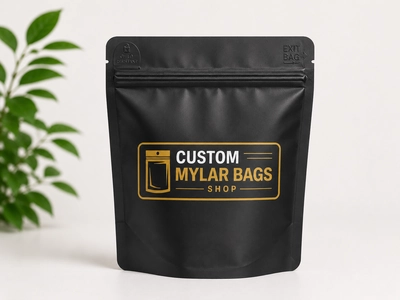
If a supplier can’t produce a recent third-party test report, the “compliant” label is marketing, not certification. At CustomMylarBags.Shop, certifications for our custom child-resistant exit bags are available on request — we’ll confirm the specific spec for your market before production.
Where Brands Get Tripped Up
1. Confusing “child-resistant” with “child-proof”
No package is child-proof. The federal standard allows up to 15% of children to open the package successfully — the goal is to slow access enough that a parent can intervene, not to create an impenetrable container.
2. Assuming the bag film matters as much as the closure
For CR testing, the closure mechanism is what’s tested. The film around it can be any compliant material. That means a smell-proof barrier film, a holographic film, or a compostable film can all be combined with a tested CR closure to create a compliant package. If you want both odor control and CR compliance, ask about combining our smell-proof mylar bag film with a certified CR zip.
3. Modifying the bag and assuming compliance carries over
If you change the bag size dramatically, swap the closure for a different brand, or alter the construction in ways that affect how the closure performs, the original test may no longer apply. Major changes can require retesting. Stick with documented configurations your supplier has tested.
4. Ignoring state-specific rules
Federal CR compliance is the baseline, but states layer their own packaging laws on top — especially in cannabis. Some require opaque packaging, specific warning text, tamper-evident seals, or specific phrasing on labels. Compliance isn’t finished at the federal line.
What “Resealable Child-Resistant” Means
Reusable CR packaging — the kind used for multi-use products like edibles or flower — has to remain child-resistant after repeated opening. That’s why CR zip closures are tested not just for the first opening but for multiple cycles. A bag that’s technically CR on day one but loses its grip after a week of reseals isn’t real compliance.
Why USA-Made CR Bags Matter for Compliance
Compliance documentation is where overseas suppliers most often fall short. Test reports may be unavailable, outdated, or apply to a similar-but-different product. Re-testing a foreign-made design when state regulators ask questions can take weeks. Domestic manufacturing gives you a direct line to the test data and faster updates when a state regulation changes — both of which matter when an inspector or a buyer asks for proof.
The Compliance Checklist for Brand Owners
Before you place a CR mylar bag order:
- Confirm the closure has a current third-party CR test report under 16 CFR 1700.20
- Ask which ASTM D3475 classification applies
- Verify the bag film is FDA food-grade and BPA-free
- Cross-check your state’s specific packaging rules (opacity, warnings, tamper-evidence)
- Plan your custom printing so warning text and child-resistant instructions are legible at point of sale
The Bottom Line
ASTM D3475 is a useful classification tool, but it’s not a certification on its own — and a supplier waving the term around without producing actual test data is selling you a marketing label, not compliance. Real compliance means a tested closure, current documentation, and a manufacturer who’ll confirm specifications for your specific jurisdiction.
If you’re sourcing CR packaging for a regulated launch, browse our custom child-resistant exit bags or request a quote with your jurisdiction details — we’ll match you with a tested specification and provide the documentation you need. For background on the broader format options, our complete guide to custom mylar bags covers materials, sizing, and printing in depth.
Disclaimer: This article is intended as a general overview, not legal or regulatory advice. Compliance requirements vary by jurisdiction and product category. Always verify current standards with a qualified compliance professional or the relevant regulator before launching a regulated product.