
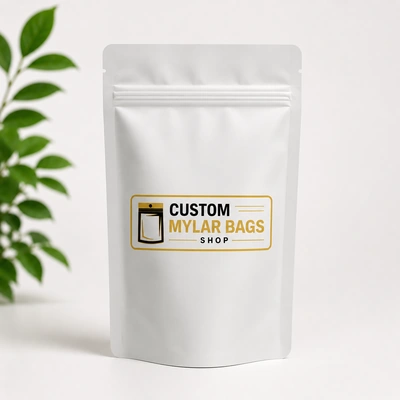
Custom mylar bags have quietly become the default for any brand that takes its packaging seriously. Coffee roasters, supplement makers, snack startups, cannabis dispensaries, pet treat companies — they’ve all moved away from generic stock bags and onto custom-printed mylar for the same simple reason: it protects the product, sells the product, and costs less than rigid packaging. But “mylar” covers a lot of ground, and the difference between a great order and a disappointing one usually comes down to a handful of choices. This guide walks through every one of them.
What Is a Mylar Bag, Actually?
“Mylar” is the everyday name for BoPET — biaxially-oriented polyethylene terephthalate. It’s a thin, strong, heat-stable plastic film that, on its own, isn’t much of a barrier. The magic happens when it’s laminated with other layers — typically a metallized layer or aluminum foil, plus a heat-sealable inner polyethylene layer. That sandwich is what blocks oxygen, moisture, light, and odor from passing through the bag wall, and what gives mylar packaging its long shelf life.
Modern food and product packaging almost never uses a single-layer film. When someone says “mylar bag,” they usually mean a 3-to-6-layer laminate engineered for a specific job: extending coffee freshness, sealing aromas, surviving freezer storage, or simply looking premium on a retail shelf.
The Main Mylar Bag Formats And When to Use Each
Every format has a personality. Picking the right one is about matching the bag’s strengths to how your product is sold, stored, and used.
Stand-Up Pouches
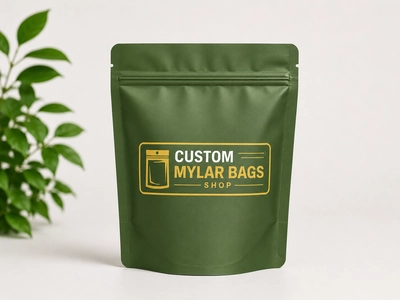
The all-purpose workhorse. A bottom gusset opens when filled so the bag stands upright on a shelf — like a mini billboard for your brand. Versatile across coffee, snacks, supplements, pet treats, and dry goods. If you’re not sure where to start, this is usually the right answer. See our custom stand-up pouches for the full options.
Flat-Bottom Bags (Box Pouches)
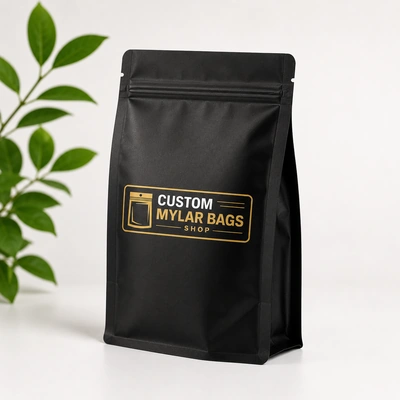
A wider, structured base creates a five-panel shape with a boxier, more premium look. Holds more product in the same shelf width, and gives you front, back, two sides, and a bottom for branding. The format of choice for specialty coffee and high-end dry goods. Browse custom flat-bottom bags.
Holographic Mylar Bags
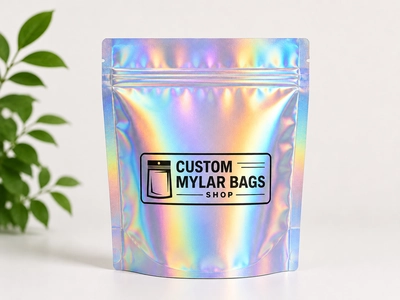
An iridescent, light-shifting finish layered into the film itself. Used when shelf attention is the priority — cannabis, candy, novelty retail, cosmetics. The barrier is the same as standard mylar; the surface just does the marketing for you. See custom holographic mylar bags.
Smell-Proof Mylar Bags
Built with a higher-barrier film and tighter seal to lock aroma in and outside contaminants out. Essential for cannabis, herbs, and any aromatic product. Read more about smell-proof mylar bags.
Child-Resistant Exit Bags
A certified CR closure mechanism added to a barrier mylar bag, required for regulated markets like cannabis edibles in most US states. We cover this in depth in our ASTM D3475 compliance guide. Shop child-resistant exit bags.
Compostable Bags
Plant-based films that break down under appropriate composting conditions, with food-grade barrier performance close to traditional mylar. For brands building a sustainability story they can actually defend. See custom compostable bags.
Sizes: Pick by Capacity, Not by Inches
Sizing is where most first-time buyers get tripped up. The mistake is choosing dimensions before you’ve thought about how the bag will be filled. Loose products like coffee beans, granola, and popcorn need significantly more interior volume than dense products like ground spices or powders. A 6″ × 9″ bag holds about a pound of coffee — but the same dimensions hold closer to two pounds of dense protein powder.
Common reference sizes:
- 3.5″ × 5″ — single-serve samples, 1–2 oz
- 4″ × 6″ — small retail units, 2–4 oz, 7g cannabis flower
- 5″ × 8″ — 8 oz coffee, edibles, mid-size retail
- 6″ × 9″ — 1 lb coffee, protein, pet food
- 7″ × 11″ — 2 lb bulk fill
- 9″ × 13″+ — wholesale and bulk applications
For a deeper breakdown by product type, see our dedicated mylar bag sizes guide.
Mil Thickness: What the Number Actually Means
“Mil” measures film thickness — one mil equals one thousandth of an inch. Thicker isn’t automatically better; it’s about matching the gauge to the job:
- 3 mil — light retail bags, samples, single-use items
- 4 mil — the everyday standard for retail mylar bags
- 5 mil — heavier products, longer shelf life, premium feel
- 6 mil+ — bulk fills, child-resistant exit bags, maximum protection
Going heavier than you need just adds cost. Going lighter than you need risks pinholes, weak seals, and product loss. When in doubt, ask your manufacturer what they’d run for your specific product — they’ve seen it before.
Custom Printing: Where Brands Win or Lose the Shelf
Printing is the most visible part of the bag and the most commonly underestimated. Two things matter most:
Print method. Digital printing is faster and economical for short runs; rotogravure delivers exceptional quality at scale. For most custom orders under a few thousand units, digital wins. Color setup. Mylar is printed in full CMYK process color, but the metallic or holographic base under the ink changes how colors appear. White ink “underlay” layers are often needed to make printed colors pop on a metallized or holographic surface. Good manufacturers handle this for you; ask whether your supplier includes white underlay or charges extra.
Finishes also affect the result: matte reads premium and modern, gloss feels vibrant and food-forward, and holographic commands attention from across the aisle. We compare them head-to-head in matte vs gloss vs holographic mylar bags.
Closures, Valves, and Extras
The seal at the top of the bag is part of the user experience. Options worth knowing:
- Heat seal — permanent seal, common for single-use items
- Press-to-close zipper — the standard resealable closure
- Slider zipper — premium-feel resealable closure
- Child-resistant zip — certified CR closure for regulated products
- Tear notch — easy-open feature for heat-sealed bags
- Hang hole — for peg display
- One-way degassing valve — essential for freshly roasted coffee
Food Safety and Compliance in 2026
If your product is consumed, your packaging needs to be FDA food-grade and BPA-free. These aren’t marketing claims; they’re material specifications your supplier should be able to document. For regulated categories — cannabis, infant products, certain pharmaceuticals — additional standards apply, including child-resistant testing protocols under 16 CFR 1700 and ASTM D3475 classification. Compostable claims require their own certifications (BPI, TÜV, or similar) and aren’t interchangeable.
When evaluating a supplier, ask three questions: Is your film FDA food-grade? Can you provide a Certificate of Compliance? What certifications can you supply on request? A supplier who hesitates on any of those isn’t a supplier to trust with packaging that touches food.
MOQ, Lead Times, and Working With a USA Manufacturer
Minimum order quantity (MOQ) is the single biggest barrier for new and small brands. Overseas manufacturers often require 5,000 to 10,000 units per design — fine for established companies, fatal for a startup testing a flavor. Domestic manufacturers like CustomMylarBags.Shop offer much lower minimums (we start at 250 units) precisely because we know growing brands need to launch without overstocking.
USA-made packaging also gives you faster turnaround, easier communication, and tighter quality control — all of which matter when a print run goes sideways or a deadline shifts. The per-unit cost is often higher than overseas, but the total cost (including reorder risk, design errors, and shipping delays) frequently lands in your favor.
Putting It All Together
The brands that win at custom mylar share a pattern: they pick the format that fits how customers actually buy the product, size it for the real fill weight, choose a mil that matches the shelf-life target, invest in custom artwork that reads at arm’s length, and order from a supplier who’ll tell them when their plan needs adjusting. Get those five things right and the bag does its job — protecting your product and pulling its weight as a marketing tool.
Avoiding the common pitfalls is just as important. We’ve seen the same design and spec mistakes repeat across hundreds of orders, and gathered the worst offenders in 7 mylar bag design mistakes that kill your brand on the shelf. If you’re a smaller brand competing against larger players, our piece on how small brands use custom mylar to compete is the other one to read.
Ready to start? Browse the full range of custom mylar bags, or request a quote and we’ll help you spec the right format, size, and finish for your launch.